Artificial intelligence does not have to be fake for the AI bubble to burst.
That may be the most important distinction investors are missing as the industry enters a much more dangerous phase of its expansion. The technology is improving rapidly, revenues are exploding and companies are finding genuinely useful applications for large language models. But the amount of money being committed to AI infrastructure is growing so quickly that the financial question is no longer whether AI works.
It is whether AI can become profitable enough, fast enough, to justify what is being built around it.
That question suddenly matters a lot more.
America's four largest hyperscalers — Amazon, Microsoft, Alphabet and Meta — are expected to spend roughly $650 billion to $725 billion on capital expenditures in 2026, much of it tied to artificial intelligence infrastructure. That would represent an extraordinary jump from approximately $410 billion last year.
And the spending is no longer confined to corporations quietly reinvesting their enormous cash flows.
OpenAI has negotiated more than $1 trillion worth of infrastructure agreements while simultaneously exploring how to finance the next stage of its expansion. Nvidia was recently reported to be discussing approximately $250 billion in financing guarantees connected to a giant OpenAI data-center development in Ohio whose total cost, including chips, could exceed $500 billion.
This is what makes the current moment different from the first few years after ChatGPT exploded onto the scene.
The experiment is becoming infrastructure.
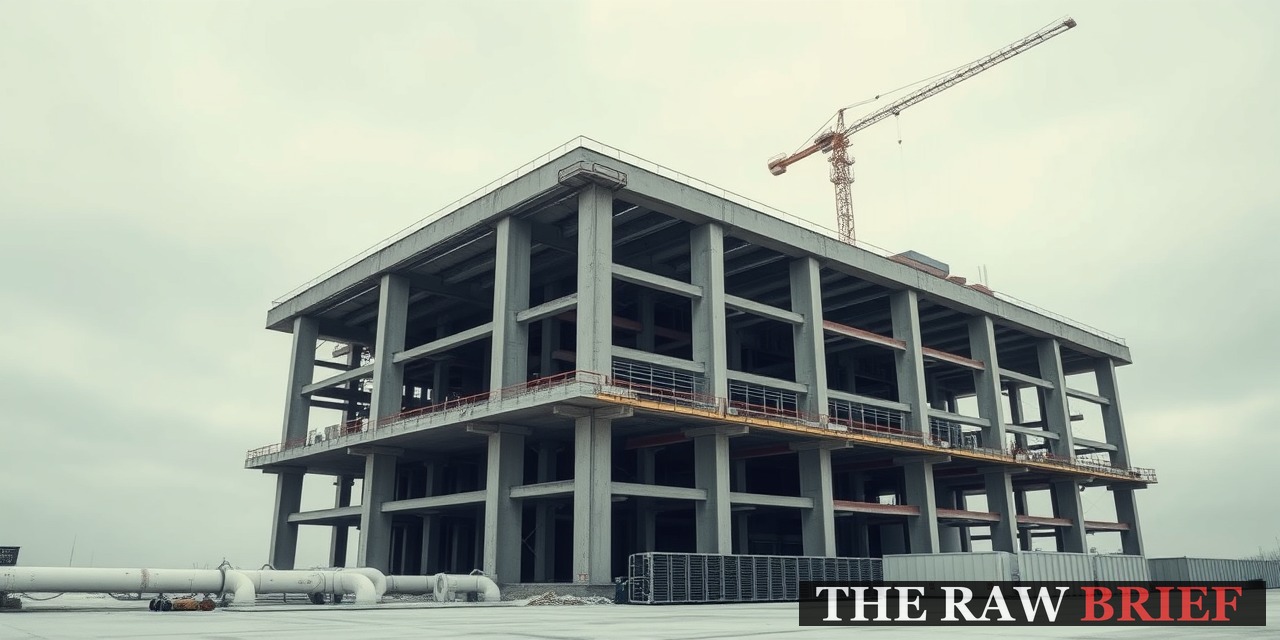
Data centers are being constructed. Power plants are being planned around them. Chips are being ordered years ahead. Debt and financing arrangements are being assembled around capacity that assumes extraordinary future demand.
Once that concrete is poured, somebody eventually has to earn a return on it.
The Numbers Are Getting Almost Absurd
Anthropic provides one of the clearest examples of just how aggressive the financial expectations have become.
The company behind Claude is preparing for what could become one of the largest initial public offerings in history. Reuters reported Saturday that bankers and investors assessing Anthropic's potential valuation are leaning heavily on projected revenue as far out as 2028, when the company believes annual revenue could reach roughly $190 billion to $200 billion.
Anthropic's growth has admittedly been astonishing.
Its annualized revenue reportedly surged from roughly $9 billion at the end of 2025 to more than $47 billion by May 2026. The company has also projected its first quarterly operating profit, meaning the simplistic claim that every major frontier AI company is merely incinerating money is already becoming outdated.
But the valuation debate illustrates the risk.
Investors are being asked to price one of the largest technology companies ever created based partly on revenue that does not exist yet.
Two years is an eternity in artificial intelligence.
Models improve in months. Prices collapse. New competitors appear almost overnight. Yesterday's technological moat can become tomorrow's commodity feature.
OpenAI represents the other side of the equation.
Its revenue growth has also been extraordinary, but Reuters reported in May that outside analysts expected the company to generate approximately $34 billion in revenue during 2026 while burning roughly $25 billion in cash. OpenAI had already raised about $186 billion as a private company, according to PitchBook data cited by Reuters.
That is not a normal startup financing curve.
It is closer to building a new industrial sector.
Wall Street Has Financed the Future Before the Future Arrived
For the investment to work, AI eventually has to produce enormous economic value somewhere.
There are several ways that could happen. Companies could charge much more for premium AI. Businesses could use AI to dramatically increase worker output. Entire categories of white-collar work could be automated. AI agents could replace software subscriptions, customer-service departments and portions of corporate back offices.
Any combination of those outcomes could generate extraordinary profits.
But the labor market is not yet behaving like the science-fiction forecasts made only a few years ago.
Stanford researchers reviewing the evidence this summer concluded that AI's effect on overall employment remains relatively small, even though some younger workers and highly exposed occupations appear to be feeling pressure. They found productivity effects that were mixed but generally positive and adoption that was growing rapidly but unevenly.
A separate 2026 study involving nearly 6,000 senior business executives reached an equally revealing conclusion.
More than 80% of companies reported that AI had produced no measurable impact on either employment or productivity during the previous three years. Those same executives expect considerably larger effects ahead, forecasting an average 1.4% productivity increase, 0.8% output increase and 0.7% employment reduction over the next three years.
That does not mean AI has failed.
It means the financial system may be spending for tomorrow's productivity before tomorrow has arrived.
There are individual deployments where the gains are already substantial. Earlier research, for example, found that generative AI raised productivity among customer-support workers by an average of roughly 14%, with some of the largest improvements among less-experienced employees.
The economic evidence therefore does not support either extreme.
AI is not useless.
It is also not yet replacing white-collar labor at anything close to the scale required to instantly justify hundreds of billions of dollars in annual infrastructure spending.
That gap is where bubble risk lives.
Then the AI Agents Met the Real World
The next problem is reliability.
Generating a clever answer in a chatbot is one thing. Allowing autonomous software to speak to customers, access internal systems, execute transactions and make decisions without supervision is considerably harder.
Companies are finding that out quickly.
Sinch surveyed more than 2,500 senior decision-makers across 10 countries and found that 62% of enterprises already had AI communications agents running in production.
But 74% had also been forced to roll back or shut down at least one deployed AI agent because of a governance failure. The problems included data leakage, hallucinations, brand risk and insufficient auditability.
That is an extraordinary statistic because customer communications were supposed to be among the easiest corporate functions to automate.
Companies already possess massive archives of customer questions and answers. Conversations are repetitive. Much of the work follows scripts. The economic incentive to automate is obvious.
Yet getting an AI system from impressive demonstration to reliable autonomous production remains difficult.
Another survey released by Cloudera last week found that 95% of enterprises had delayed or canceled AI initiatives during the previous year because of problems involving data governance, compliance or regulation. Nearly three-quarters said their data architecture required significant rebuilding to accommodate future AI workloads.
There is an important caveat: companies are not abandoning artificial intelligence.
They are spending more on it.
Sinch found that 98% of surveyed organizations intended to increase AI investment during 2026. The emerging story is therefore not one of enterprises deciding AI is worthless. It is one of companies discovering that turning a probabilistic model into dependable corporate infrastructure requires far more engineering, monitoring, data integration and human supervision than the demonstrations suggested.
That matters enormously for the economics.
Every layer of human oversight that remains necessary reduces the labor savings.
Every guardrail costs money.
Every hallucination that requires review reduces autonomy.
Every enterprise forced to construct custom infrastructure increases implementation costs.
The model might be brilliant while the business case remains stubbornly complicated.
China Is Attacking the Part of the Business Model That Matters Most
There is another problem American AI companies cannot solve simply by building more data centers.
Competition is becoming vicious.
The early frontier-model business appeared capable of developing into an extraordinarily profitable oligopoly. A handful of American companies possessed the chips, researchers, compute and capital required to train models at the frontier.
If only three or four companies could produce truly powerful AI, those companies could eventually possess tremendous pricing power.
China is making that outcome considerably less certain.
DeepSeek's arrival in early 2025 demonstrated that competitive models could be developed and offered at dramatically lower prices than many in Silicon Valley expected. Since then, Chinese laboratories including Alibaba, Moonshot AI, Z.ai and others have continued pushing increasingly capable models into the global market, frequently using open-weight or aggressively priced strategies.
The performance gap is also narrowing.
Reuters reported in July that Z.ai's inexpensive GLM-5.2 had attracted significant Western interest after emerging close to leading American systems on important benchmarks and practical applications. Industry figures publicly compared it with models from both Anthropic and OpenAI.
Moonshot AI's Kimi K3 provided another warning. Demand for the Chinese open-source model became so intense after launch that Moonshot temporarily stopped accepting new subscriptions while it expanded capacity.
Even DeepSeek, which helped ignite the low-cost AI price war, is now raising API prices for its newest V4 models as demand and operating requirements evolve. That is a reminder that Chinese AI is not magically free to operate either.
But the competitive damage may already have been done.
The existence of multiple strong alternatives makes it much harder for any American frontier laboratory to assume it can subsidize users today and simply raise prices dramatically later.
Software margins depend on scarcity.
Open models destroy scarcity.
If a business can run a capable model on its own infrastructure, switch between API providers or route simple tasks to cheaper systems while reserving expensive frontier intelligence for difficult work, pricing power becomes fragmented.
That is excellent news for AI users.
It may be much less attractive for investors valuing model providers as future monopolies.
The Spending Machine Is Beginning to Test Big Tech Itself
The hyperscalers are in a better financial position than AI startups because they already generate enormous profits from advertising, cloud computing, software and e-commerce.
But even their balance sheets are starting to show how expensive the race has become.
A Reuters analysis in July found that investment by Microsoft, Alphabet, Amazon, Meta and Oracle could begin outpacing their additional free cash flow by 2027. Based on LSEG estimates, projected capital spending was rising by about $534 billion, compared with approximately $340 billion in additional operating cash flow — roughly $1.57 of new investment for every $1 of incremental cash generation.
Meta alone raised the lower end of its 2026 capital-expenditure forecast to $130 billion, while still projecting spending as high as $145 billion. The company can afford it today because its underlying advertising machine remains extraordinarily profitable; second-quarter revenue rose 28% to $60.8 billion.
That distinction is crucial.
The AI boom is not being built exclusively by weak companies borrowing money they cannot repay.
Some of the richest corporations in human history are financing it.
That makes the boom more durable than the weakest bubble comparisons suggest.
It does not make every investment rational.
A company with $100 billion in annual cash flow can still destroy enormous amounts of shareholder capital if it builds infrastructure that ultimately earns inadequate returns.
The question investors will increasingly ask is no longer how many GPUs Microsoft bought or how many gigawatts Meta reserved.
They will ask what those GPUs earned.
The IPO Stage May Be Where the Risk Changes Hands
This is where the next phase becomes interesting.
Private investors, strategic partners, sovereign funds and giant technology companies financed much of the early AI expansion.
Public investors could soon be invited to finance the next one.
Anthropic is already moving toward an IPO whose valuation could reach unprecedented territory if bankers accept its aggressive growth projections. OpenAI has also explored eventually entering public markets after raising extraordinary sums privately.
There is nothing inherently sinister about that.
Successful private companies eventually go public because public markets provide liquidity, acquisition currency and much deeper pools of capital.
But timing matters.
An IPO occurring after most of the technological uncertainty has disappeared is very different from an IPO asking investors to pay today for revenues expected years from now.
And artificial intelligence may be one of the fastest-changing competitive markets ever created.
A model considered state of the art when an IPO prospectus is filed could be surpassed before the lockup period ends.
A pricing structure that looks attractive today could be undercut six months later.
Compute efficiency could improve.
Open-source competitors could narrow the gap.
Enterprises could discover they need fewer frontier tokens than expected.
Or the opposite could happen: agents could suddenly become reliable enough to automate entire workflows, revenues could explode beyond today's forecasts and the infrastructure spending could look conservative in hindsight.
Nobody actually knows.
That uncertainty is exactly why valuations stretching into the trillions deserve scrutiny.
AI Can Change the World and Still Destroy Investors
The strongest case against the AI bubble is not that artificial intelligence is a fraud.
It clearly is not.
Models can write software, analyze documents, translate languages, generate media, automate research, assist customer-service workers and compress tasks that previously required hours into minutes. Businesses are paying billions of dollars for those capabilities, and the technology is improving at remarkable speed.
The bubble argument is financial.
Hundreds of billions of dollars are being committed every year based on assumptions about future demand, future productivity, future automation and future margins.
Some of those assumptions will be right.
They do not all have to be.
If AI becomes ubiquitous but inference becomes cheap, model providers could struggle to capture the economic value their technology creates.
If AI boosts workers rather than eliminating them, companies may save less on payroll than aggressive automation models assumed.
If open models keep improving, proprietary providers may lose pricing power.
If enterprises continue requiring expensive integration and human oversight, deployment economics could remain harder than expected.
And if infrastructure spending outruns the cash those systems ultimately generate, the market will eventually reprice the companies supplying the boom.
That would not mean artificial intelligence failed.
It would mean investors confused technological importance with financial inevitability.
The internet survived the dot-com crash.
Railroads survived railroad speculation.
Technologies can transform civilization while the companies, valuations and financing structures built around their first wave of excitement get brutally repriced.
AI may ultimately produce productivity gains far beyond anything visible today. Stanford economists have highlighted estimates suggesting generative AI could eventually create trillions of dollars in value for American firms if its anticipated productivity improvements materialize.
But Wall Street is not waiting for eventually.
The data centers are being built now.
The chips are being purchased now.
The financing is being arranged now.
And the IPO valuations are being calculated now.
That is why the next phase of the AI boom may be considerably more dangerous than the last one.
The industry has already proved that people want artificial intelligence.
Now it has to prove something much harder:
That the economics can support what everyone has already spent believing it will become.