Iran is sending President Donald Trump an increasingly blunt message: Tehran believes it can wait him out.
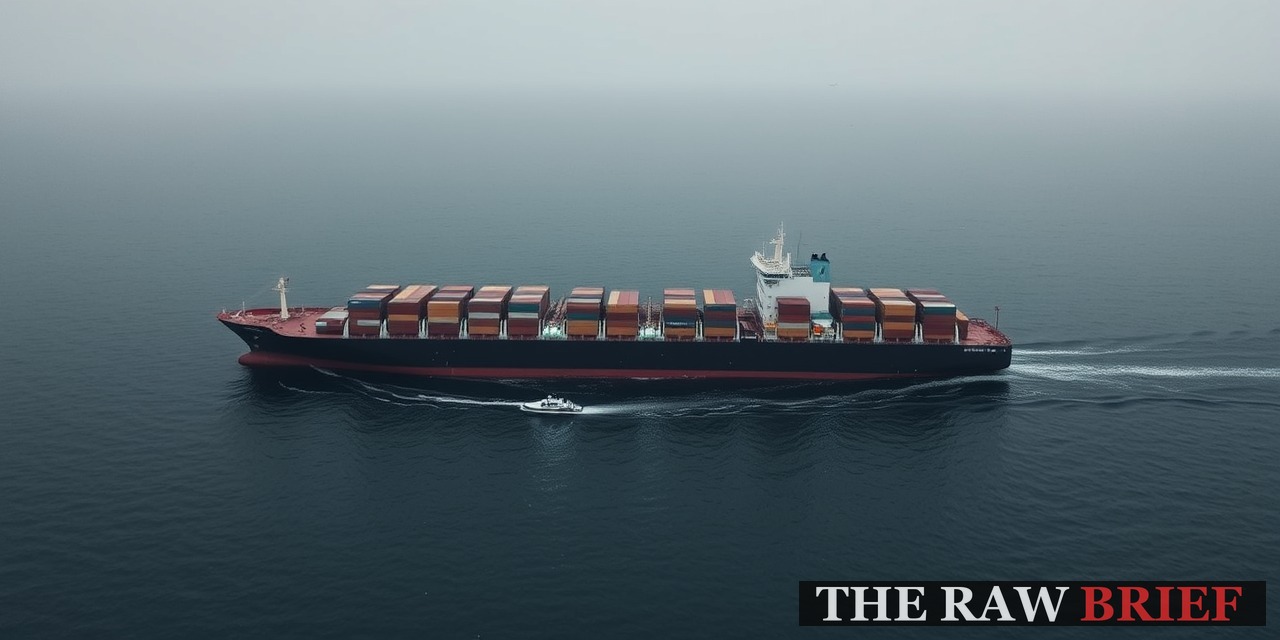
The Strait of Hormuz remains effectively blocked after more than five months of war, and Iranian officials continue to insist that normal passage will not return until Washington meets major conditions including compensation for war damage, sanctions relief and an end to U.S. military threats. At the same time, Majid Shakeri, an adviser to Iranian Parliament Speaker Mohammad Bagher Ghalibaf, has publicly argued that Tehran should avoid giving Trump the comprehensive agreement he wants and instead manage the confrontation until the president leaves office on Jan. 20, 2029.
That is not the same as Iran formally declaring that the Strait of Hormuz will remain closed until 2029.
But when Shakeri's comments are placed alongside the position being expressed by the Islamic Revolutionary Guard Corps, the strategic message is difficult to miss.
"Trump will not reach an agreement with us. We will accompany him until his term ends," Shakeri said, according to Iranian media reports cited Monday. He argued that Iran's path forward should be neither full-scale war nor a rushed settlement, but management of what he described as a prolonged state of "neither war nor peace."
Separately, an IRGC spokesman said Iran's current strategy is to maintain its position in the Strait of Hormuz until the United States accepts Tehran's conditions, describing the strategic waterway as a theater of war rather than merely a commercial shipping route.
Put the two positions together and a far more serious possibility emerges: Iran increasingly appears willing to make time itself part of the conflict.
Trump has roughly two and a half years remaining in his term. Tehran may believe it does not need to defeat the United States militarily, force an American withdrawal tomorrow or secure every concession through another round of negotiations. It may only need to preserve enough leverage to make the political and economic cost of the confrontation increasingly painful for Washington.
Hormuz gives Iran precisely that leverage.
Before the war, roughly one-fifth of global oil and liquefied natural gas moved through the Strait of Hormuz. The waterway has been effectively blocked since the U.S.-Israeli attacks on Iran began Feb. 28, disrupting energy markets and contributing to higher oil prices and inflation.
Months of U.S. military operations have not broken Iran's grip on the strait. Reuters reported last week that a proposed arrangement being negotiated between Iran and Oman could actually give Tehran significant authority over vessels entering the Persian Gulf, a dramatic outcome considering Washington has repeatedly said it would never accept Iranian control over the world's most important energy chokepoint.
The proposed framework would route commercial vessels through Iranian territorial waters, while Tehran has sought the ability to inspect traffic and potentially collect fees. A senior Iranian source told Reuters that Iran had proposed charges equal to 5% to 7% of cargo value, while Washington continued demanding free passage. Several details remain unresolved.
That negotiating position looks very different from the outcome Trump predicted when the war began.
Trump initially spoke about Iran's "unconditional surrender." Five months later, Washington is instead negotiating over the conditions under which commercial shipping might return through Hormuz, while Iranian officials openly discuss controlling traffic through the strait.
Now Tehran is signaling it may have no reason to hurry.
Shakeri is not Iran's foreign minister, supreme leader or official government spokesman, and his proposal to wait until 2029 should therefore not be mistaken for a formal decree adopted by the Iranian state. His comments nevertheless matter because he advises Ghalibaf, one of the most powerful political figures in Iran and a central figure in Tehran's negotiating apparatus.
His argument also fits the broader strategy Iran has pursued throughout the conflict.
Tehran continues indirect diplomatic contacts rather than formally abandoning negotiations. Iranian Foreign Ministry officials say messages are still being exchanged through intermediaries, while negotiations with Oman over new shipping arrangements are continuing.
The distinction is important. Iran does not have to close every diplomatic channel to wait Trump out. It can negotiate narrowly where useful, preserve ambiguity, avoid signing the sweeping agreement Washington wants and continue using Hormuz as leverage.
That is essentially the "neither war nor peace" strategy Shakeri is advocating.
For Trump, the political clock works differently.
The president faces congressional midterm elections in November, while the economic consequences of prolonged disruption to global energy markets are already politically dangerous. Reuters reported Monday that Trump is under pressure to end a war that remains deeply unpopular domestically.
Oil markets offered another reminder Monday of how quickly the Hormuz dispute can hit consumers. Brent crude jumped more than 4% after the latest exchange of demands between Washington and Tehran further reduced expectations that an agreement to reopen the waterway was imminent.
Trump also dramatically escalated the rhetoric Monday by demanding that Iran compensate victims he attributed to Tehran across several conflicts, responding directly to Iran's demand that Washington pay for damage caused during the war.
Trump said compensation would become part of any future negotiations. He also demanded payments connected to the 2000 bombing of the USS Cole, although the FBI attributes that attack to al Qaeda rather than Iran.
That exchange makes a near-term comprehensive settlement even harder to imagine.
Iran has demanded compensation for damage from U.S. and Israeli strikes, an end to sanctions and military threats before reopening Hormuz. Trump is now countering that Iran must pay compensation of its own.
Each side is effectively adding conditions while claiming the other must move first.
For Iran, however, continued deadlock has an unusual strategic advantage. Every additional month that Hormuz remains disrupted places pressure not only on Washington but on countries dependent on Gulf energy, international shipping companies, insurers and global consumers.
That gives Tehran something conventional military comparisons often miss.
Iran does not need a larger navy than the United States to impose economic costs through geography.
The United States can destroy Iranian military facilities, strike missile launchers and deploy overwhelming naval and air power across the region. But five months into the conflict, it has still not restored the prewar condition in which commercial ships routinely moved through Hormuz without Iranian approval.
That is why the 2029 argument matters.
If Tehran concludes that Trump needs a settlement more urgently than Iran does, its negotiating incentive changes dramatically. Instead of asking what concessions are necessary to secure a deal now, Iranian strategists can ask how much leverage they can preserve while Washington absorbs the political, military and economic cost of another two years of confrontation.
Shakeri's remarks suggest that at least one influential current inside Tehran believes that is exactly the game Iran should play.
There are serious risks for Iran in such a strategy. Its economy remains under enormous pressure. Continued sanctions impose real costs, renewed American strikes remain possible and another major escalation could produce devastating destruction inside Iran.
Nor is it certain Tehran could maintain effective disruption of Hormuz until 2029. Military conditions can change rapidly, regional governments are pursuing alternative shipping and pipeline routes, and Iran itself has economic reasons to eventually restore more normal trade.
But Tehran does not have to guarantee three more years of closure for the threat to matter.
It merely has to convince Washington that it is willing to endure longer than Trump is.
That may be the darker message underneath Iran's latest rhetoric.
The question is no longer simply whether Trump can force Iran into an agreement. It is whether Tehran has decided that the president's greatest vulnerability is the calendar.
Trump's term has a fixed expiration date.
Iran's leverage over its geography does not.
And if Tehran believes it can preserve that leverage while avoiding an all-out war, the Strait of Hormuz could remain the pressure point hanging over Washington for far longer than the White House expected.
The viral claim that Iran has officially ordered Hormuz closed until 2029 goes too far.
What Iran is signaling may be more consequential: accept terms Tehran can live with, or prepare for a confrontation Iran increasingly believes it can drag out until Donald Trump is no longer president.