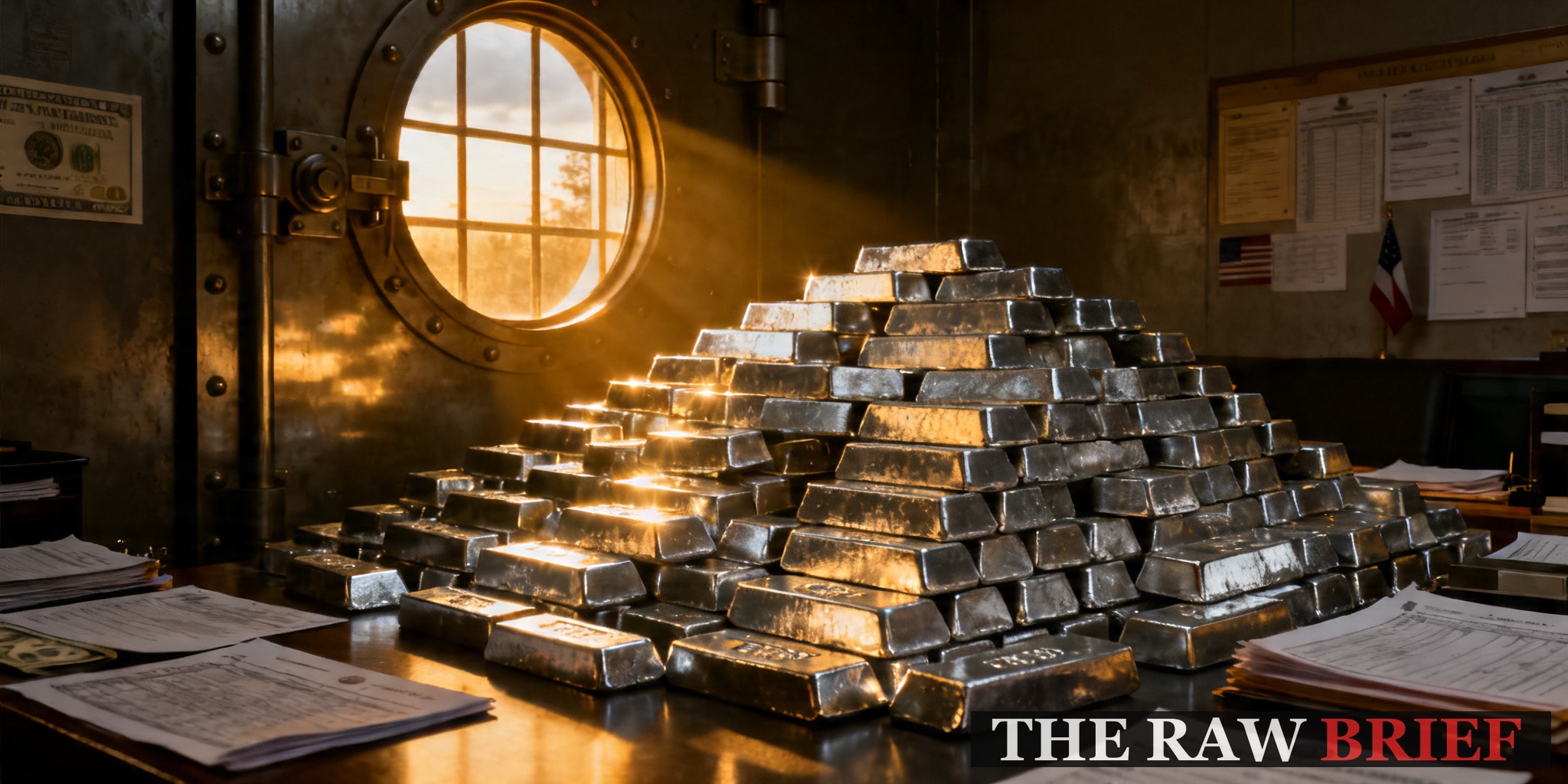
Andy Schectman said that eight Western banks hold the largest concentrated short position in COMEX history, creating a massive paper-to-physical mismatch that could drive silver prices to $330 by the end 2026.
"There are 2 billion ounces of paper contracts in London versus 140 million ounce float," Schectman said. "What could possibly go wrong?"
He contended that eight Western banks have maintained this unprecedented short position while physical deliveries are rapidly draining metal from exchange vaults. According to Schectman, Bank of America's lead precious metals analyst predicts silver could reach between $109 and $330 per ounce by the end of 2026.
Central banks and large institutions have been taking physical delivery of gold and silver at unprecedented levels for 16-17 consecutive months, removing metal from exchange vaults. This physical removal creates additional pressure on the paper market structure.
Schectman argued that the United States faces $200 trillion in total debt when including unfunded liabilities. "We're 200 trillion in debt," he said. He added that "the dollar has the preservation value of a melting ice cube these days."
USA Tether has purchased $15 billion in gold, making it one of the largest gold holders globally, which could push gold higher and the dollar lower. This institutional accumulation represents a significant shift in gold ownership patterns.
New payment systems like Mbridge and SIPs are emerging outside the dollar system, settling in seconds with 98% lower fees and potentially reducing global dollar demand. China is expanding the Shanghai Gold Exchange vault network globally through the Belt Road Initiative, creating alternative gold settlement systems outside Western control.
Schectman claimed that the Federal Reserve faces a difficult choice between lowering rates, which accelerates inflation, and raising rates, which breaks the leveraged financial system, with $10 trillion in government treasuries coming due in 2026.
"I think if you're not a contrarian, you're damn well going to be a victim," Schectman said, emphasizing the need for alternative wealth preservation strategies amid these structural shifts.