A ceasefire between the United States and Iran has been brokered by Pakistan, with a key requirement being the opening of the Strait of Hormuz, according to analyst notes. The agreement comes amid heightened tensions and military actions across the region.
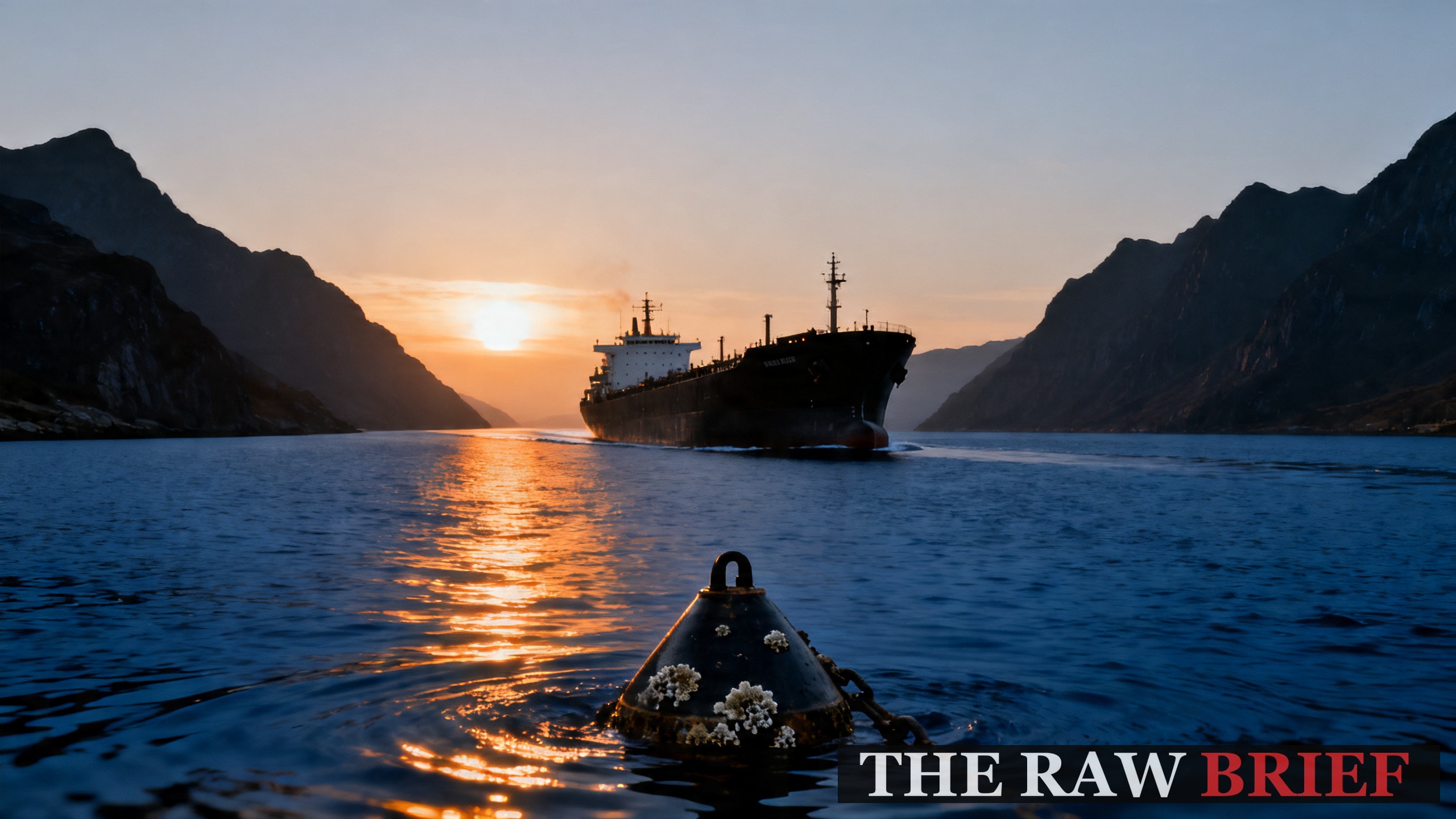
Iran had implemented a toll system and chokehold on the strategic waterway, allowing only select vessels to pass after striking monetary or diplomatic deals. "Essentially, Iran put a choke hold and a toll system in place that led select vessels through that would strike a deal with them, either monetarily or through diplomatic channels," said Bilawal Sidhu. Iran has also confirmed the presence of anchored mines in the strait and formalized a transit path near Larak Island.
On April 7, former President Donald Trump issued a stark ultimatum demanding Iran open the Strait of Hormuz. "And then Trump gave an ultimatum basically saying that by 8:00 p.m. on April 7th, Iran must open up the Strait of Hormuz, otherwise this will be the end of their civilization," Sidhu stated. The same day, an additional 50 strikes targeted Qeshm Island.
In response to the crisis, the U.S. doubled insurance guarantees for ships transiting the strait in early April to encourage maritime traffic. Vessel transits increased to 15 on April 8 but remain far below pre-conflict levels.
Shortly after the ceasefire announcement, Israel launched a massive coordinated strike on Lebanon. "Israel called these attacks operation eternal darkness and essentially hit over a 100 targets within 10 minutes," Sidhu reported. The attack, which occurred the day after the ceasefire, has sparked speculation within the open-source intelligence community that Israel may have exploited a digital vulnerability. "The rumor circulating in the OSINT community is that the Israelis essentially get in on a Zoom call and use that to geolocate everyone that was dialing in and use sort of this confusion around this precarious ceasefire to conduct this attack," Sidhu said. He added, "It is pretty clear that Hezbollah is realizing this is the biggest security lapse that they've experienced since the Pager incident."
In a significant aerial engagement, Iran downed an F-15E deep inside its territory near Isfahan. A subsequent U.S. rescue operation involved over 155 aircraft and 100 special forces personnel. There is speculation the mission near Isfahan may have had a secondary objective related to missing enriched uranium from Iran's nuclear program. "The speculation is fueled by the following data points. The trigger is that basically there is 440 kg of 60% enriched uranium missing since operation midnight hammer which happened last year and of course 90% enrichment is considered weapons grade and it was known to be located at the Isfahan facility," Sidhu explained.
Iran retaliated for recent strikes by targeting critical infrastructure, including desalination plants in Kuwait and oil and petrochemical complexes in the UAE. In a separate development, Israel killed Major General Majid Kadmi, the IRGC intelligence chief, in a strike.
The U.S. has not made any official comments on the Israeli operation in Lebanon. "The Israelis say they were planning to do this regardless," Sidhu noted. With peace talks slated to occur with Pakistan as the intermediary, there is hope for de-escalation. "With peace talks slated to happen with Pakistan as the intermediary, hopefully we get some good news," Sidhu concluded.