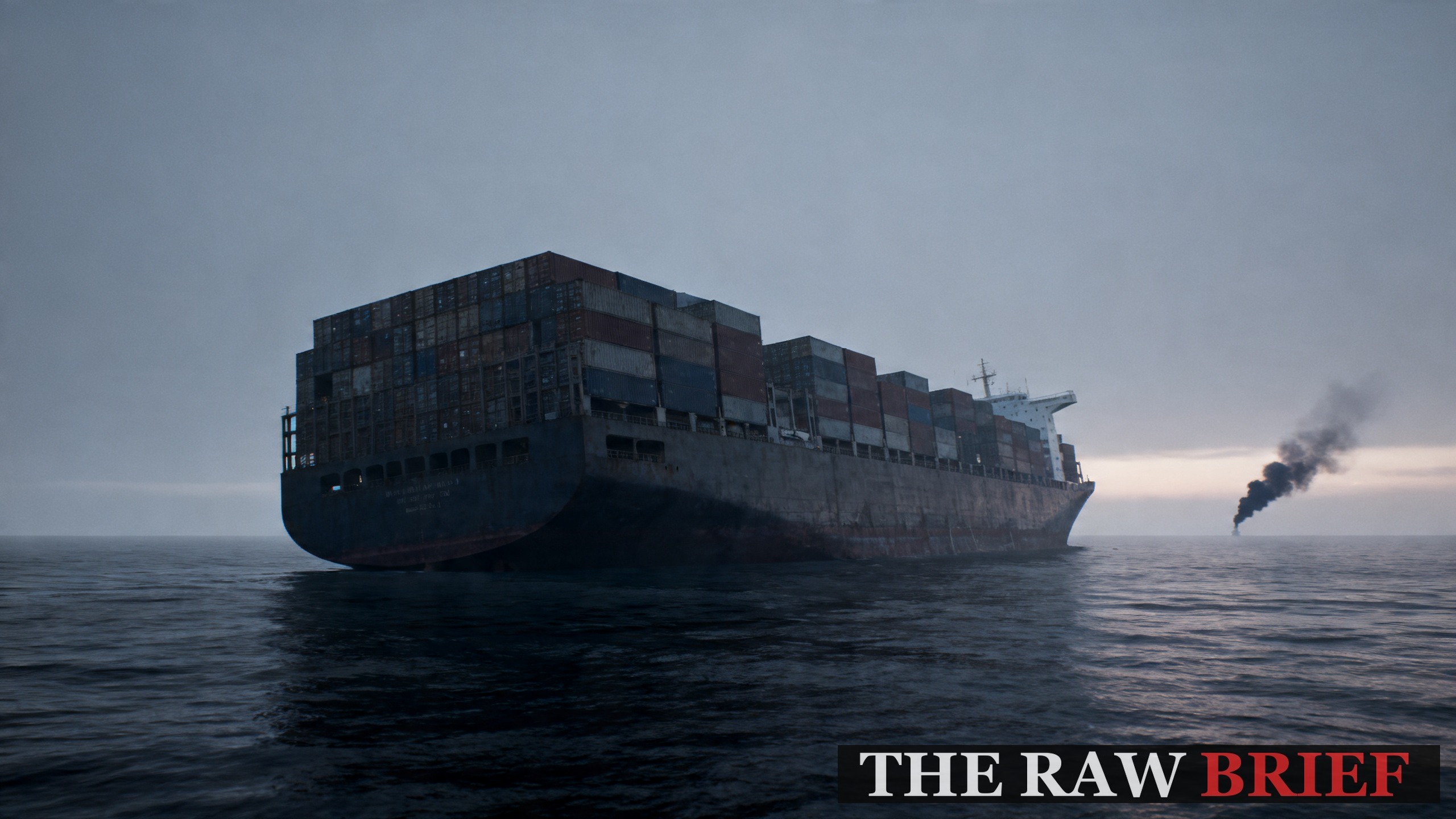
President Trump has threatened to impose an oil blockade on Iran in response to Iran's seven-week closure of the Strait of Hormuz, a critical chokepoint for global oil shipments. The escalating standoff, ongoing since late February 2026, has already driven oil prices to $92 per barrel and threatens to trigger a global economic depression worse than that of 1929.
Lt. Col. Daniel Davis stated that Trump is attempting to resolve the crisis while protecting economic interests. "President Trump is doing everything he can to try and bring this war to an end with Iran and to try and salvage the problem that we have with our economics and the lifeblood of the global economy and especially that of the Americans and that is oil," Davis said. He warned of catastrophic consequences if the closure continues: "If this continues to go on for two or three more months even, then we could get into depression territory that is as bad or worse than the depression of 1929."
President Trump defended the aggressive stance, stating, "Maybe everything. Both of those things certainly and more. We can't let a country blackmail or extort the world cuz that's what they're doing. They're really blackmailing the world. We're not going to let that happen."
The U.S. blockade strategy has been criticized as an act of war under international law. Commodore Steve Jeremy noted, "A blockade is overtly an act of war and it is of questionable legality." He expressed skepticism about the strategy's effectiveness: "I think it's almost the other way around, Daniel. Not that the blockade can't be put in place, but in terms of answering your question, how does it help? I can't see how it helps at all."
China has forcefully criticized the U.S. blockade, though a Chinese vessel was reportedly allowed through despite restrictions. The crisis has exposed critical vulnerabilities in global energy security, with Taiwan holding only about nine days worth of LNG reserves, threatening its semiconductor industry.
Global diesel prices have doubled or tripled, severely impacting shipping, mining, agriculture, and manufacturing worldwide. Jeremy emphasized the critical nature of diesel supplies: "Diesel is the critical one to watch here, Danny. And I would expect and hope that in this country we'll be rationing diesel for private consumption because I think it's much more important that we keep it available for food, farming and fishing."
The energy crisis threatens to cause widespread famine, with fertilizer shortages potentially reducing crop yields by 40%, affecting tens of millions of people. Jeremy warned of catastrophic population impacts: "If there are significant reductions in energy, we will see reductions in world population and that won't be a pretty reduction. I think it will be a reduction particularly in poor countries which rely on imported grains and imported foods. It could be fairly catastrophic."
Jeremy drew historical parallels to previous energy crises: "Recession to a consumer a deep recession is the sorts of things that happened after the oil shocks. There was the first oil shock led to a three-day working week in Britain." He also noted the fundamental relationship between energy and economic progress: "People often say, well, the great improvements in the economy have been due to technology. I simply don't think it's true because technology doesn't work without energy."