Explosions were reported across southern Iran late Wednesday as the United States carried out another wave of strikes, pushing the conflict back toward open escalation and placing one of Iran’s most sensitive provinces at the center of the crisis.
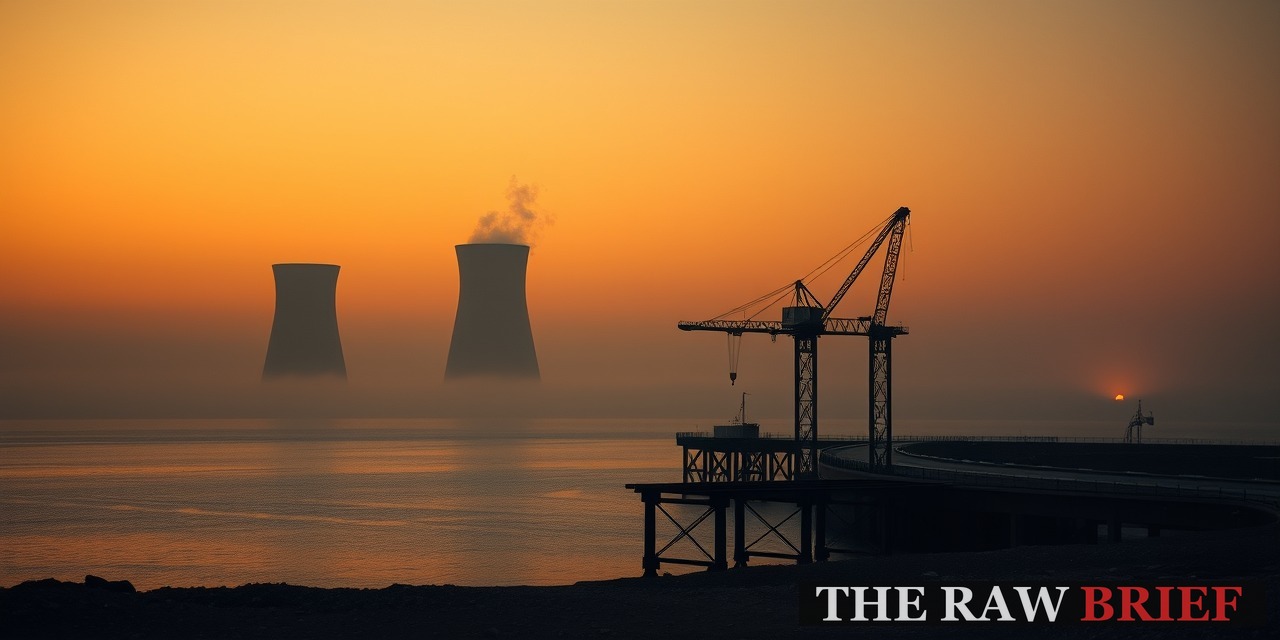
Iranian state-linked media reported blasts in Bushehr, a southern coastal province that hosts Iran’s only operational civilian nuclear power plant and sits near Kharg Island, the country’s main crude export hub. Reports also described strikes or explosions around Bandar Abbas, Chabahar, Konarak, Iranshahr and Abu Musa Island, locations tied to Iran’s ports, maritime infrastructure and control of the Strait of Hormuz.
U.S. Central Command said the new strikes were ordered to further degrade Iran’s ability to threaten freedom of navigation through the Strait of Hormuz. The latest wave followed attacks on commercial vessels transiting the waterway, which Washington blamed on Iran.
President Donald Trump framed the strikes as retaliation, warning Tehran that if attacks on shipping continued, “it will get much worse.” He also said the interim agreement with Iran was effectively over, telling reporters he did not want to deal with Tehran.
But the most dangerous signal may now be coming from Tehran.
Iran’s top joint military command accused Washington of a “blatant act of aggression” and promised a “crushing response,” while warning that Iran would not tolerate U.S. interference in the management of the Strait of Hormuz. Nournews, which is affiliated with Iran’s top security body, cited an Iranian military source saying a “massive attack” on U.S. Army bases in the region was being prepared.
That threat lands differently after Bushehr.
Iranian media said explosions were heard in Bushehr and surrounding areas. Mehr reported that the Bushehr nuclear power plant itself was not damaged, while a provincial official cited by Fars said two military bases in Bushehr province had been targeted and no casualties were immediately reported.
The absence of confirmed damage to the nuclear plant does not make the strike politically small.
Bushehr is not just another coastal city. It is a nuclear symbol, an energy symbol and a military pressure point on the Persian Gulf. A strike in that province — even if directed at military infrastructure rather than the reactor itself — carries a message Tehran cannot easily ignore.
Iran is already treating the latest U.S. strikes as a broader violation of the fragile ceasefire framework. Iranian officials argue the memorandum had recognized Tehran’s role in managing safe passage through the Strait of Hormuz. Washington now says Iran abused that position by threatening commercial shipping. The two sides are no longer arguing over interpretation. They are using missiles and airstrikes to enforce it.
Inside Iran, the rhetoric is hardening.
Mohammad Bagher Zolghadr, secretary of Iran’s Supreme National Security Council, warned Trump to speak to the Iranian people with respect, saying Iran would otherwise respond “in another language.” Parliament’s National Security Commission has also floated extreme options, including withdrawal from the Nuclear Non-Proliferation Treaty, changes to Iran’s nuclear doctrine and pressure on another global shipping chokepoint, the Bab-el-Mandeb Strait.
Those are not routine threats.
They are escalation signals.
Iran does not need to hit the U.S. homeland to make Americans feel less secure. It can target U.S. bases in the Gulf. It can raise the cost of shipping through Hormuz. It can pressure allied states hosting American forces. It can threaten oil infrastructure, maritime control towers, tanker traffic and regional airspace. It can make every U.S. asset in the region operate under wartime uncertainty.
That appears to be the battlefield now.
The U.S. is trying to reassert control over Hormuz through force. Iran is trying to show that control of the Gulf cannot be imposed without a price.
Oil markets are already reacting. Reuters reported Brent crude moved higher after the latest strikes, while earlier rounds of escalation pushed crude sharply upward and forced shipping companies to reassess tanker movement through the region.
The nuclear dimension makes the moment more volatile.
There is no confirmed damage to the Bushehr reactor from the latest wave. But strikes in the province that hosts Iran’s nuclear power complex risk turning a maritime conflict into a nuclear-safety crisis, even if no nuclear facility is deliberately targeted. A mistake, a misfire or a strike near supporting infrastructure would be enough to trigger regional panic.
That is why this phase is more dangerous than the earlier exchange.
The first question was whether the ceasefire could survive tanker attacks.
The new question is whether the region can survive a cycle of U.S. strikes near Iran’s southern military and energy infrastructure while Tehran openly threatens a crushing response against American power across the Gulf.