Ukraine wanted to send a message.
Iran made sure Kyiv had to explain it.
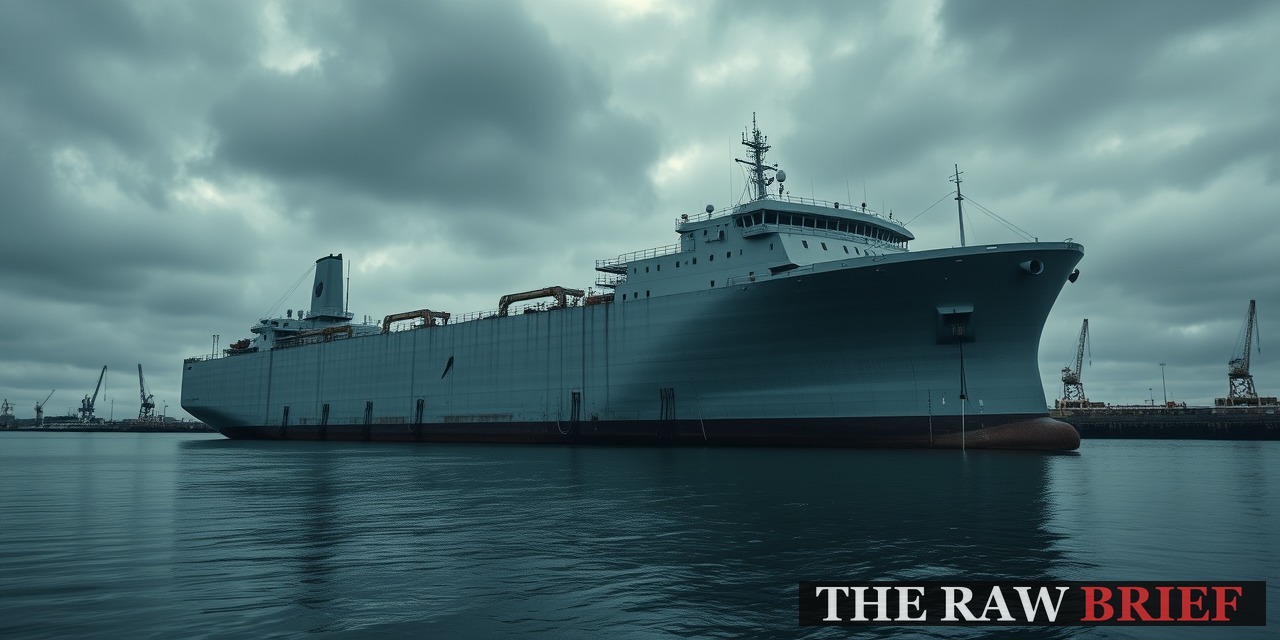
After Tehran accused Ukraine of striking an Iranian commercial vessel in the Caspian Sea, killing one sailor and injuring another, Iran summoned Ukraine’s diplomatic representative and warned that the attack “could not go unanswered.” The message from Tehran was blunt: Ukraine had crossed into a much bigger war than the one it was already fighting with Russia.
Then came the phone call.
Ukrainian Foreign Minister Andrii Sybiha spoke with Iranian Foreign Minister Abbas Araghchi and said Ukraine’s actions were aimed at defending itself from Russian aggression, not striking civilian vessels or civilians. Reuters reported that Araghchi said Sybiha assured him the attack on the Iranian ship was unintentional and that Kyiv did not seek escalation.
Call it clarification. Call it damage control. Call it diplomatic cleanup.
But the meaning was obvious.
Ukraine had hit something Iran claimed as civilian, Iran threatened consequences, and Kyiv quickly moved to contain the fallout.
That is not how a country behaves when it wants a new direct confrontation with Iran. It is how a country behaves when it realizes one strike may have opened a door it does not want to walk through.
Publicly, Sybiha still tried to sound firm. He said he warned Iran against escalation and told Tehran to end support for Russia’s war. That was the line Kyiv needed for its own audience. Ukraine has spent years accusing Iran of helping Russia attack Ukrainian cities with Iranian-designed drones, and Kyiv was not going to look weak in front of Tehran.
But Araghchi’s version of the call exposed the softer reality.
Iran said it had been assured the strike was unintentional. Iran said Kyiv did not seek escalation. Iran said it did not seek escalation either, but that attacks on Iranian citizens or interests were unacceptable and required restitution.
That is the real story.
Kyiv did not just warn Iran. It reassured Iran.
That matters because the Caspian Sea is not just another battlefield. It is one of the places where the Ukraine war and the Iran war now threaten to touch each other directly. Russia and Iran both border the Caspian. Moscow has used Iranian-designed drones against Ukraine. Iran says it has not intervened in the Russia-Ukraine conflict, while Ukraine says Iranian-linked military shipments have helped Russia’s war effort.
That is why the diplomatic scramble was so important.
Ukraine can justify pressure on the supply chain feeding Russia. Iran can frame any Ukrainian strike on Iranian interests as an attack on its sovereignty. Russia benefits if the conflict expands and forces Kyiv to worry about another hostile power. Israel and the United States benefit if Iranian-linked networks are weakened. Every side has an incentive to push the line.
But Kyiv’s call showed there is still a line.
Ukraine did not want Iran to read the Caspian strike as the start of a direct Ukraine-Iran war. It did not want Tehran to treat Ukrainian action as a blank check for retaliation. It did not want the incident to become the moment Iran openly turned from Russia’s supplier into Ukraine’s direct enemy.
So Kyiv explained.
That is the part hidden behind the diplomatic language.
The official wording was careful. Ukraine did not publicly crawl. Iran did not publicly let it go. Both sides preserved their posture. But beneath that, the sequence was clear: Iran protested, Iran threatened consequences, and Ukraine moved to reassure Tehran that escalation was not the goal.
That is not a small thing.
For years, Ukraine has been on the receiving end of Iranian-designed drones through Russia. Now, after one incident in the Caspian, Kyiv found itself telling Tehran it did not mean to hit civilians and did not want the confrontation to widen.
Iran forced that statement without firing a shot.
And in this war, that is power.